
Adsorbed natural gas (ANG).
A low-pressure (900 psi), bi-fuel natural gas solution for light-duty vehicles like pickup trucks, SUVs and service vans.
ANG storage, vs. 3,600 psi for CNG
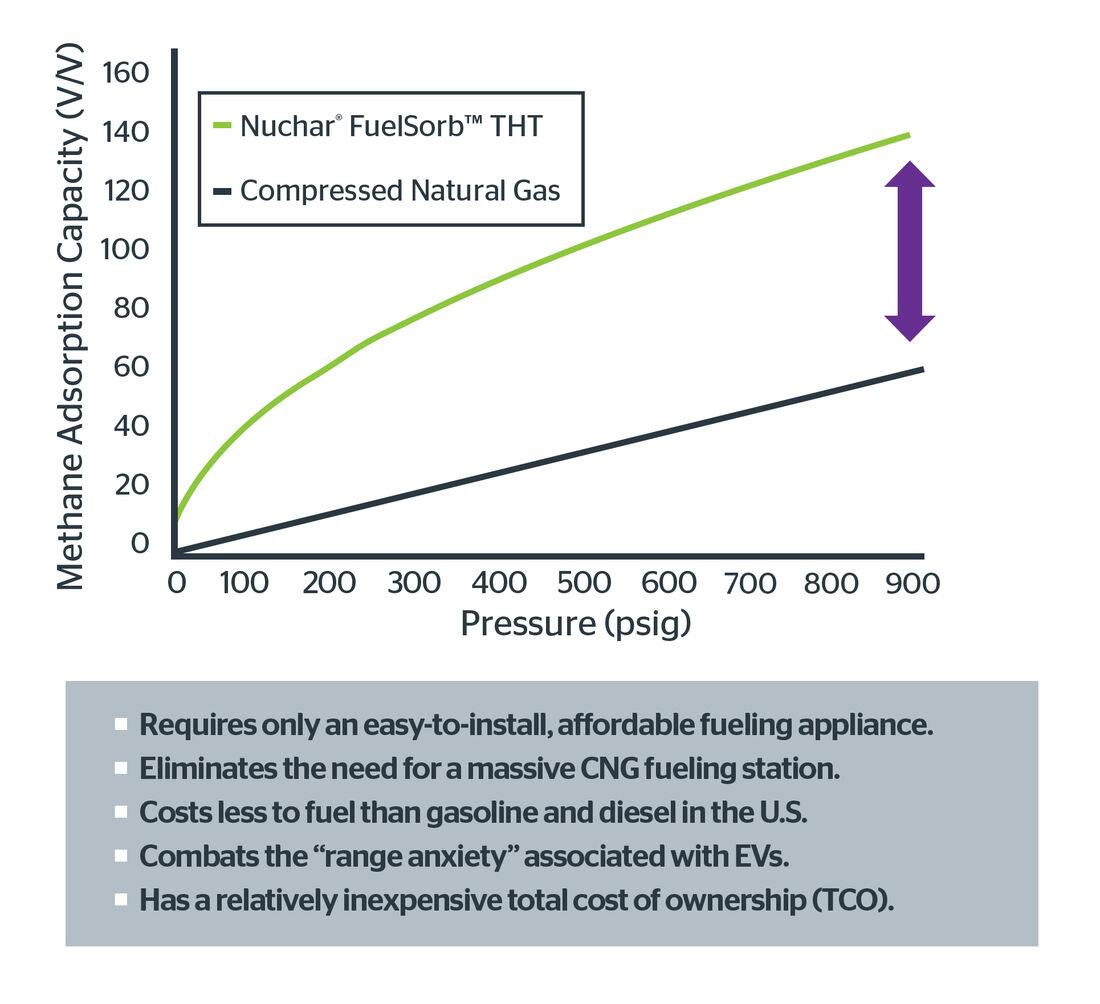
ANG tanks hold twice the gas at the same pressure
Of average daily miles on natural gas alone
Fuel savings per GGE vs. gasoline (U.S. DOE)
How lower pressure changed the game.
ANG technology marks the second wave of NGVs. The science behind it is likely already part of the car you drive: activated carbon has been used for over 40 years in vehicles around the world to capture and recover over 8 million gallons of gasoline vapor emissions every day. The same activated carbon technology enables ANG.
Activated carbon monoliths made from hardwood sawdust, rather than coal, capture and release gas more efficiently. Ingevity's Nuchar® FuelSorb™ carbon monoliths fill cylindrical tanks nested in the truck bed and are shaped for natural gas vehicle tanks. Operating at 900 psi instead of CNG's 3,600 psi, ANG tanks hold twice the natural gas at equivalent pressures, with the benefits of CNG at a fraction of the operating pressure.
Built for small, dispersed fleets.
ANG is ideal for light-duty fleets of 5 to 20 vehicles with easy access to natural gas but without the scale to justify higher-pressure CNG.
Environment
Studies in California show a reduction of more than 20% in greenhouse gases for NGVs compared to gasoline, and in excess of 100% when using renewable natural gas.
Convenience
Private fueling with ANG uses the natural gas network already serving 60 million homes and over 5 million businesses across the U.S.
Range
Bi-fuel ANG trucks can serve 100% of average daily usage miles on natural gas alone.
Value
The U.S. Department of Energy's alternative fuel price report shows natural gas users can save up to $2.50 per gasoline gallon equivalent (GGE) compared to gasoline.
ANG calibration.
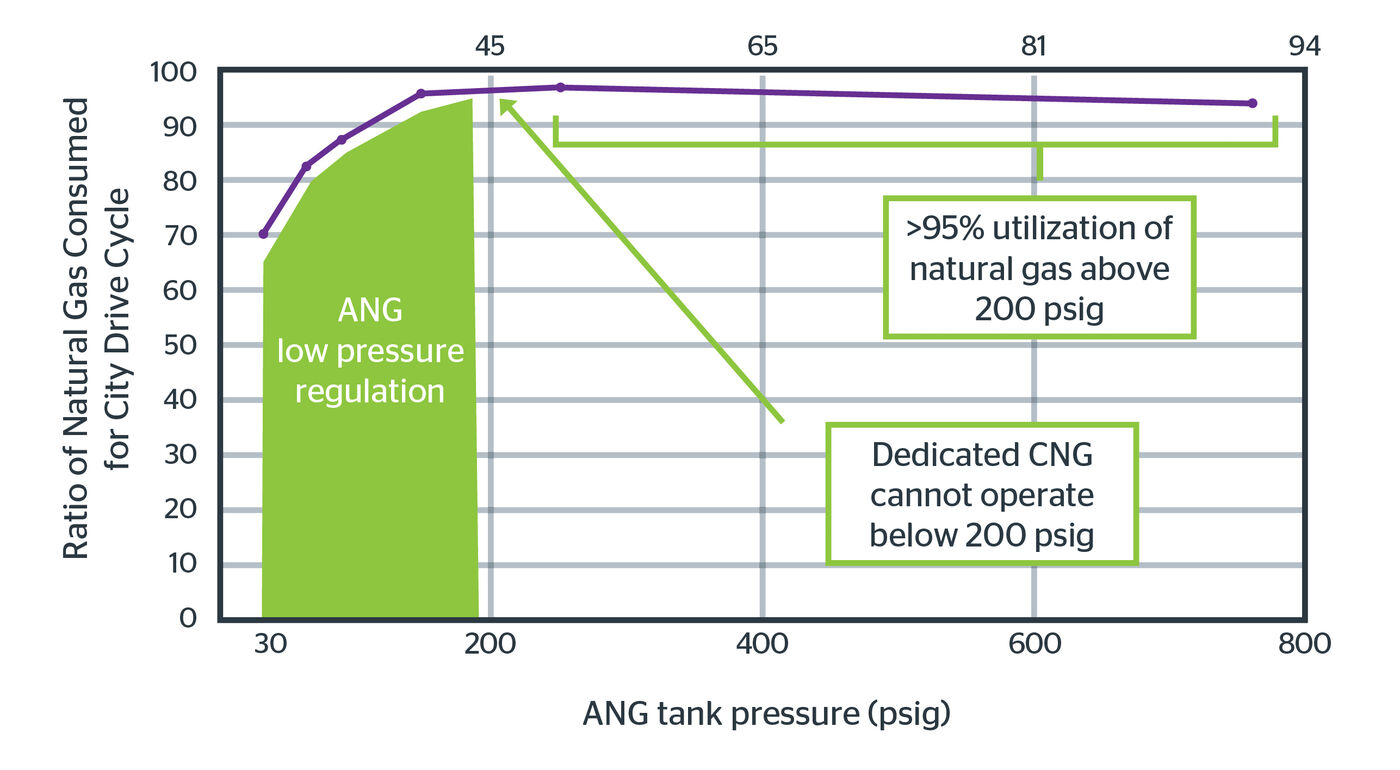
ANG bi-fuel calibration uses more natural gas than CNG. A Ford F-250/350 modified to run on bi-fuel ANG keeps the full vehicle warranty through Ford's Qualified Vehicle Modifier (QVM) program.
Fuel at your own site.
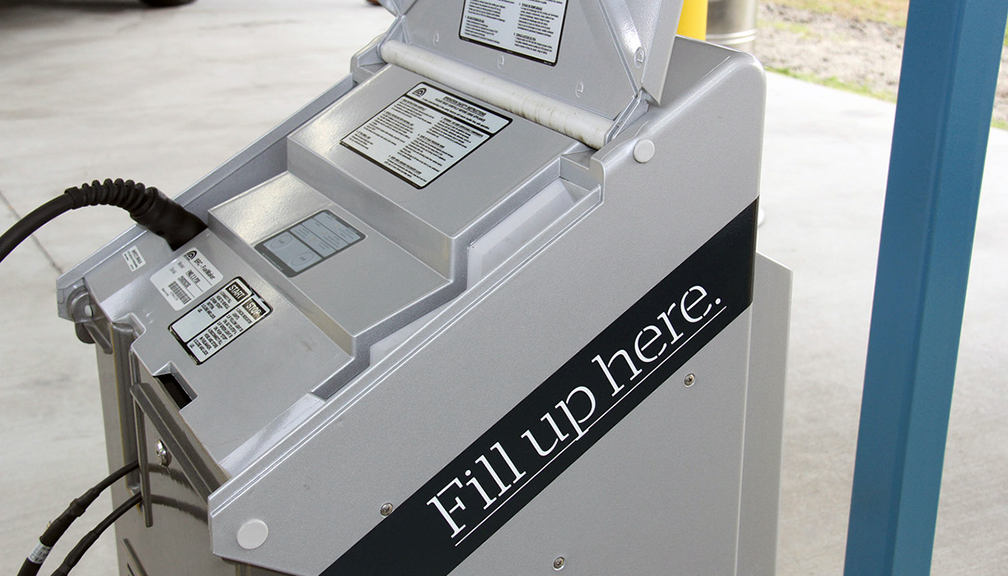
Fueling with ANG at 900 psi is faster and less costly to maintain than CNG at 3,600 psi. Italy-based Cubogas is the main manufacturer of the Fuelmaker FMQ 2.5 ANG fueling appliance.
- Two fueling hoses (P9 nozzles) to fuel 2 trucks at once
- American National Standards Institute NGV certification (5.2)
- Fuels at about 1 GGE per hour
The total cost of ownership (TCO) of a new FMQ 2.5 is almost $0.89 per GGE, and about $1.00 per GGE for a used one. Gas Technology Institute studies show that even 3,600 psi CNG compressors repurposed to fuel at 900 psi ANG pressure can have a TCO within $1.00 per GGE.
See the ANG lineup.
Bi-fuel ANG systems for the F-150, Super Duty and Transit.